The Lake They Couldn't See
On the morning of June 12, 1853, a prospector named John Wesley Hillman was riding a tired mule through the Cascade Mountains of southern Oregon, hunting a gold mine that may never have existed. His party had heard about the Lost Cabin: a vein so rich the men who found it had to abandon it and were never able to find their way back. So Hillman and a dozen others spent their days staring at the ground, reading the rock for color, half-mad with the fear that a rival party would get there first.
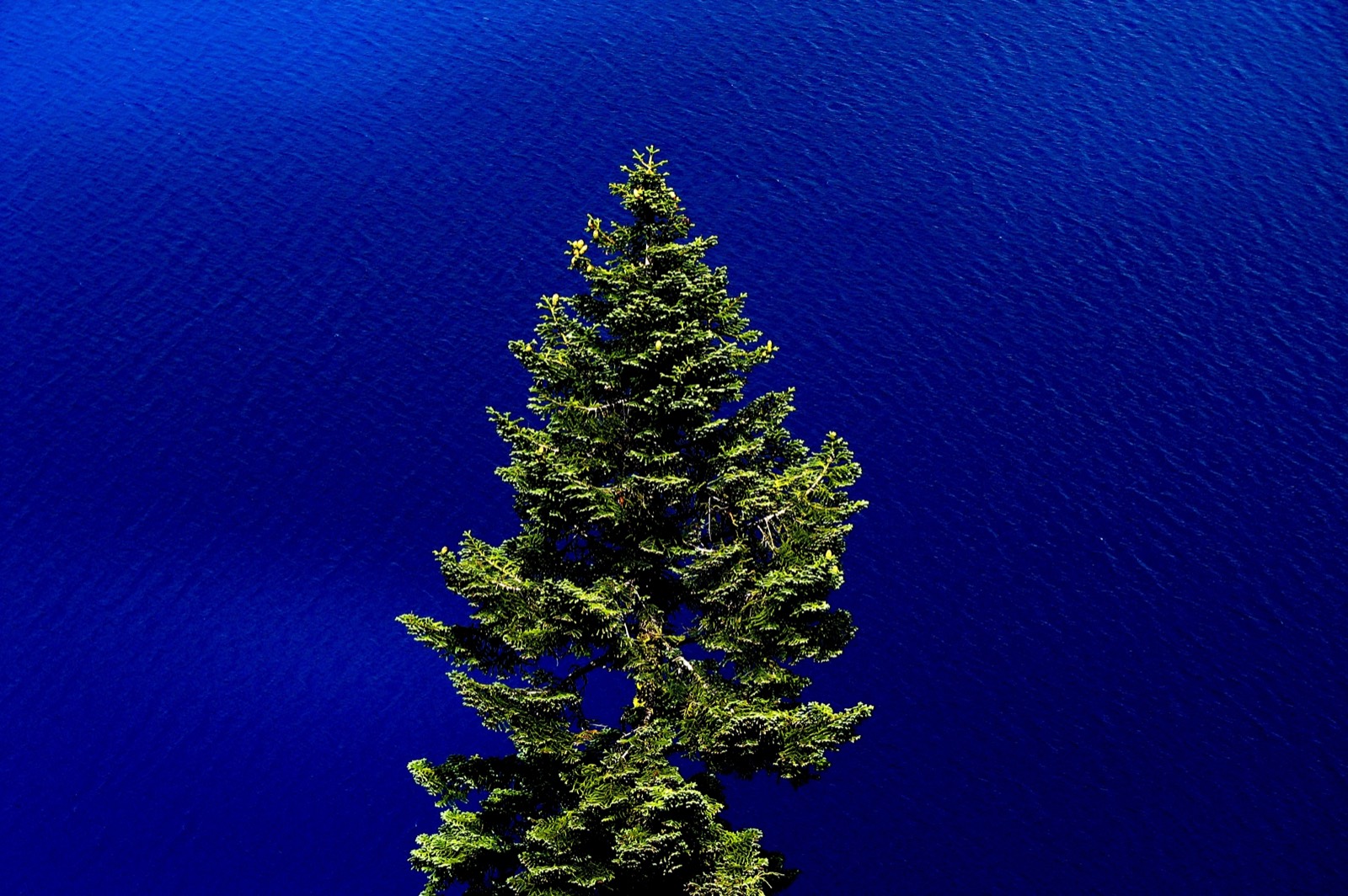
His mule stopped at the edge of a cliff. Hillman looked down, and saw a lake unlike anything he had ever seen.
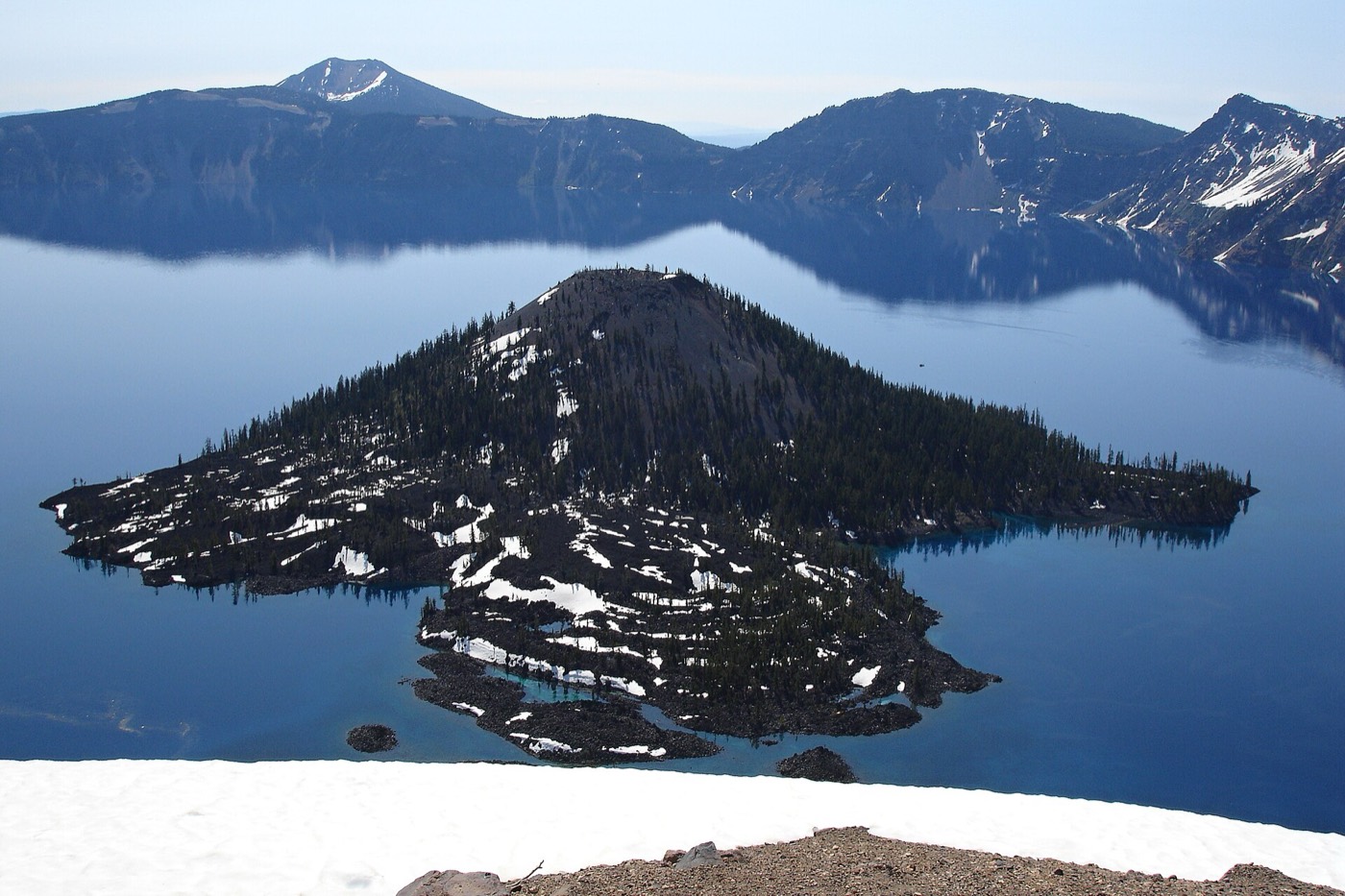
It would come to be known as Crater Lake. It is the deepest lake in the United States, nearly two thousand feet of clear water held in the throat of a collapsed volcano, and the water is a blue so saturated it looks poured in rather than reflected. The men admired it for a few minutes. They named it Deep Blue Lake. Then they got back on their mules and went looking for the gold.
The lake was promptly forgotten as the men went home to tell stories lacked any credibility. Two more parties stumbled onto it over the next sixteen years, each certain it was theirs to discover, before the name Crater Lake finally stuck in 1869. The Klamath had known it the whole time, and held it sacred, and never needed to name it twice. It was never lost. It was only worth nothing to men who were counting.
The shape of a rush
The story isn’t about one surprising afternoon in the Oregon wilderness. It is a pattern that shapes every “gold rush”, and they come round again and again. Every half-century or so a new kind of gold appears, and we go take the world apart to get it.
Plenty of people will tell you that no longer holds, that progress now compounds too fast for fifty-year waves. The gaps are shrinking even in this essay: a hundred and fifty years between the gold and the fiber, twenty-six between the fiber and the machines. Anthropic’s Dario Amodei thinks powerful AI could fold a century of progress into a decade. He may be right that the inventing goes faster now. Inventing was never the part that took fifty years.
Deep Dive: Is the cycle actually speeding up?
The accelerationists say yes, and have for a while. Ray Kurzweil’s law of accelerating returns holds that each advance shortens the road to the next, so the curve bends upward and the gaps between revolutions close; an AI that can improve AI would be the ultimate compression. Amodei’s “compressed century” is the strong form of the claim.
The stagnationists say the opposite. Robert Gordon and Tyler Cowen point out that measured productivity growth has been mediocre since around 1970, computers and all. The gains feel enormous and barely register in the numbers. On this read the frenzy is louder, not faster.
Perez sits between them, and I think she has the better of it. Invention may well be accelerating. Diffusion is not, because diffusion runs through people, laws, and concrete. A breakthrough can land in a lab in a year; pouring the foundation, training the electricians, and securing the water take as long as they always have. But none of that is fixed. Diffusion speed is a choice a society makes. China charges its cars five times faster than America does on chemistry published in journals anyone can read, because it spent a decade building the grid and the workforce to install it. The gold can go exponential; the shovel moves only as fast as we decide to build it. Amara’s law gets the last word: we overestimate what a technology does in two years and underestimate what it does in ten.
There is a larger argument here, which I will take up on its own another time: we have no honest yardstick for innovation, only for spending. Concentrated capital, however vast, cannot manufacture the thing that actually carries an idea forward, which is a broad community able to absorb it and pass it on. A trillion dollars in a few companies’ hands is not the same as a million hands that know what to do with it.
The economist Carlota Perez gave this its proper name. In her account, a technology arrives, money piles in, a frenzy builds out the new infrastructure at frantic speed, the whole thing crashes, and only then does the technology settle into the long, productive golden age it was supposedly about all along. Installation, then a turning point, then deployment. Her waves run about half a century not because invention is slow but because absorption is. An economy can be rewired in a few frantic years; the institutions and the concrete that have to catch up cannot.
What the cycle does to people is the part worth watching. The people who chase the asset almost always lose, and the people who build the means of extraction almost always win. The diggers go home broke, and the man who sold them shovels buys a house. The second thing is harder to look at. While we stare at the gold, we stop seeing whatever carries no price: the lake nobody can sell, the town downstream nobody thinks to count.
I build new products and companies for a living, so I have a professional interest in which of those two groups a person ends up in.
Gold
History doesn’t often promote the individuals who owned the gold and got nothing. Well, in this case, he got a SF Street named after him among other things.
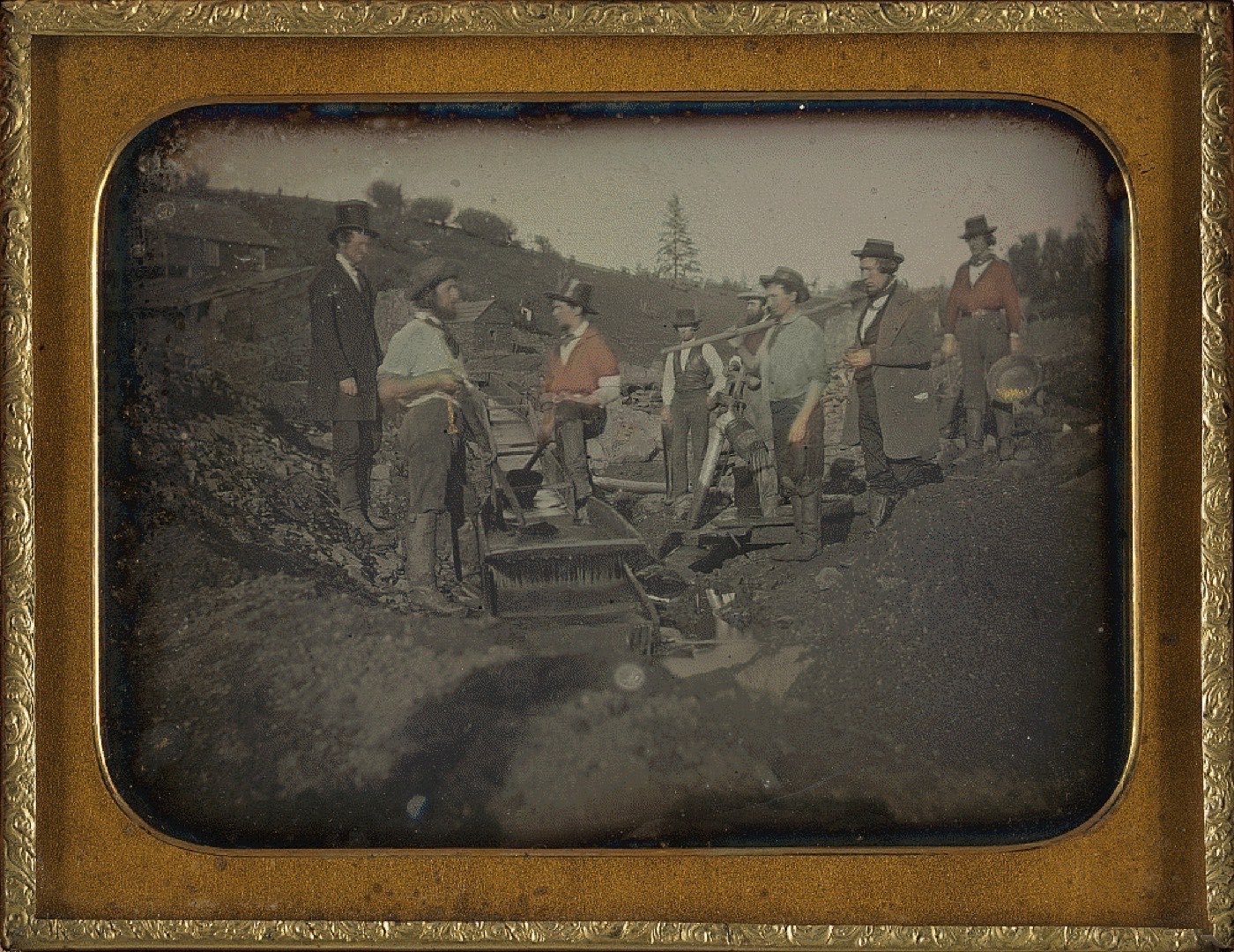
John Sutter had nearly fifty thousand acres on the Sacramento River, an agricultural empire he called New Helvetia, and he wanted nothing more than to grow wheat on it in peace. When his carpenter, James Marshall, found flakes in the millrace that January of 1848, Sutter did not celebrate. He understood at once what gold does to a place full of men, and he begged everyone at the mill to keep it quiet. They did not. Within a year his workers had walked off into the hills, his cattle had been slaughtered by trespassers, his fields were trampled, and his land was overrun by squatters who simply took it. He spent the rest of his life petitioning Congress for compensation and died in a Washington hotel in 1880, broke.
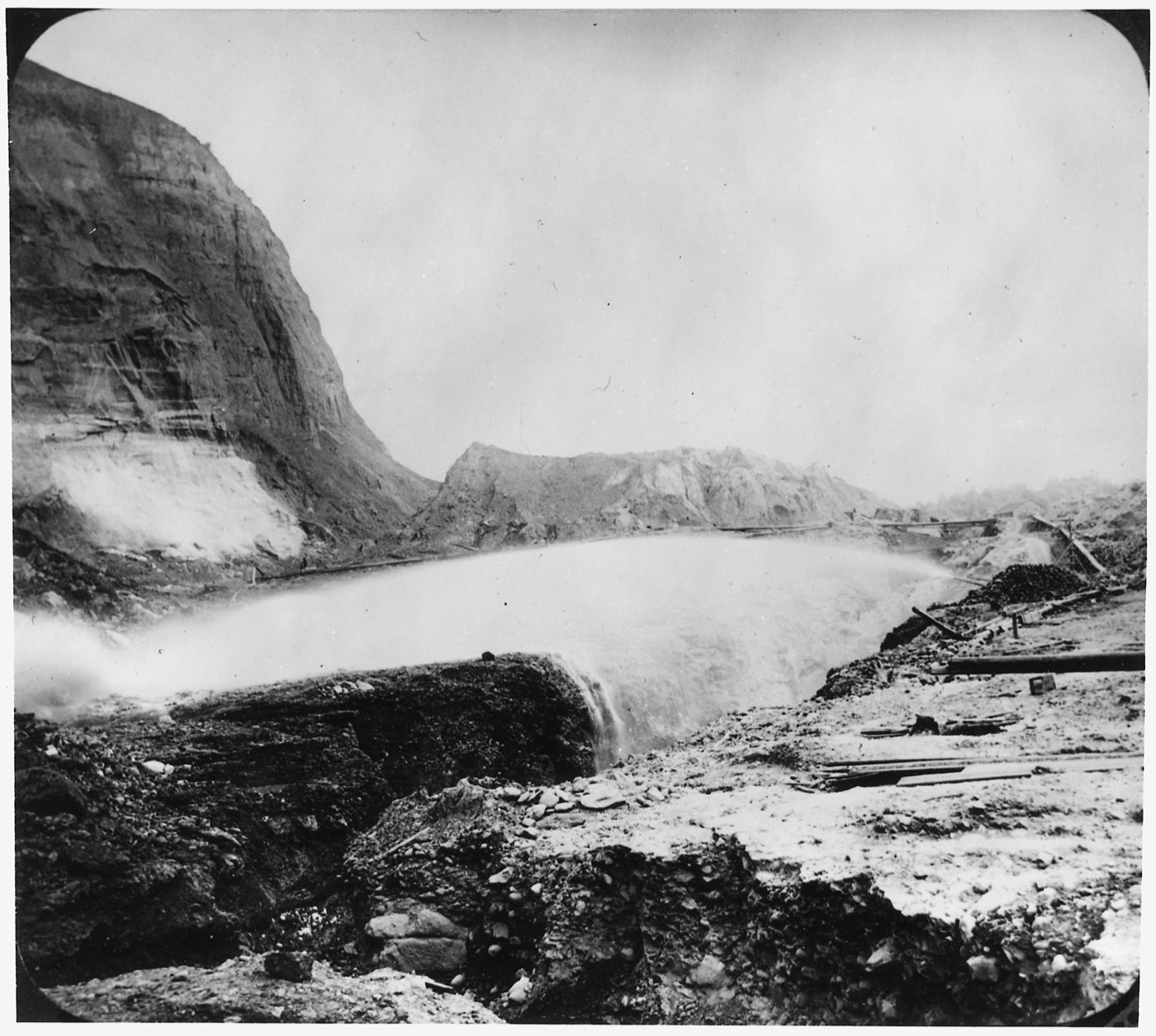
The shovels did better. Within a few years the easy gold was gone, and the men who stayed turned the search into an industrial assault. They built the hydraulic monitors: iron water cannons fed by miles of flume that stole alpine rivers, dropped them down the mountains, and fired the water back out at pressures in the hundreds and then the thousands of pounds. A monitor could cut a man in half at a distance. Pointed at a hillside, it dissolved it. The monitors washed enough of the Sierra Nevada into the rivers to fill the excavation of the Panama Canal more than five times over.
That debris had to go somewhere, and it went downstream onto the people who fed the miners. It raised the riverbeds, and the rivers climbed their banks, and the farm town of Marysville drowned, again and again, under mud that had recently been a mountain. The men who melted the mountains flooded the valley, and the valley sued. It took a generation. In 1884, in Woodruff v. North Bloomfield, Judge Lorenzo Sawyer banned the debris and shut the great hydraulic mines down. It was the first ruling of its kind in the country, and it came, as it always does, after the damage was done.
And all the while, up in its mountain, the bluest lake on the continent sat there costing nothing and earning nothing, waiting to be noticed by someone who wasn’t counting.
Glass
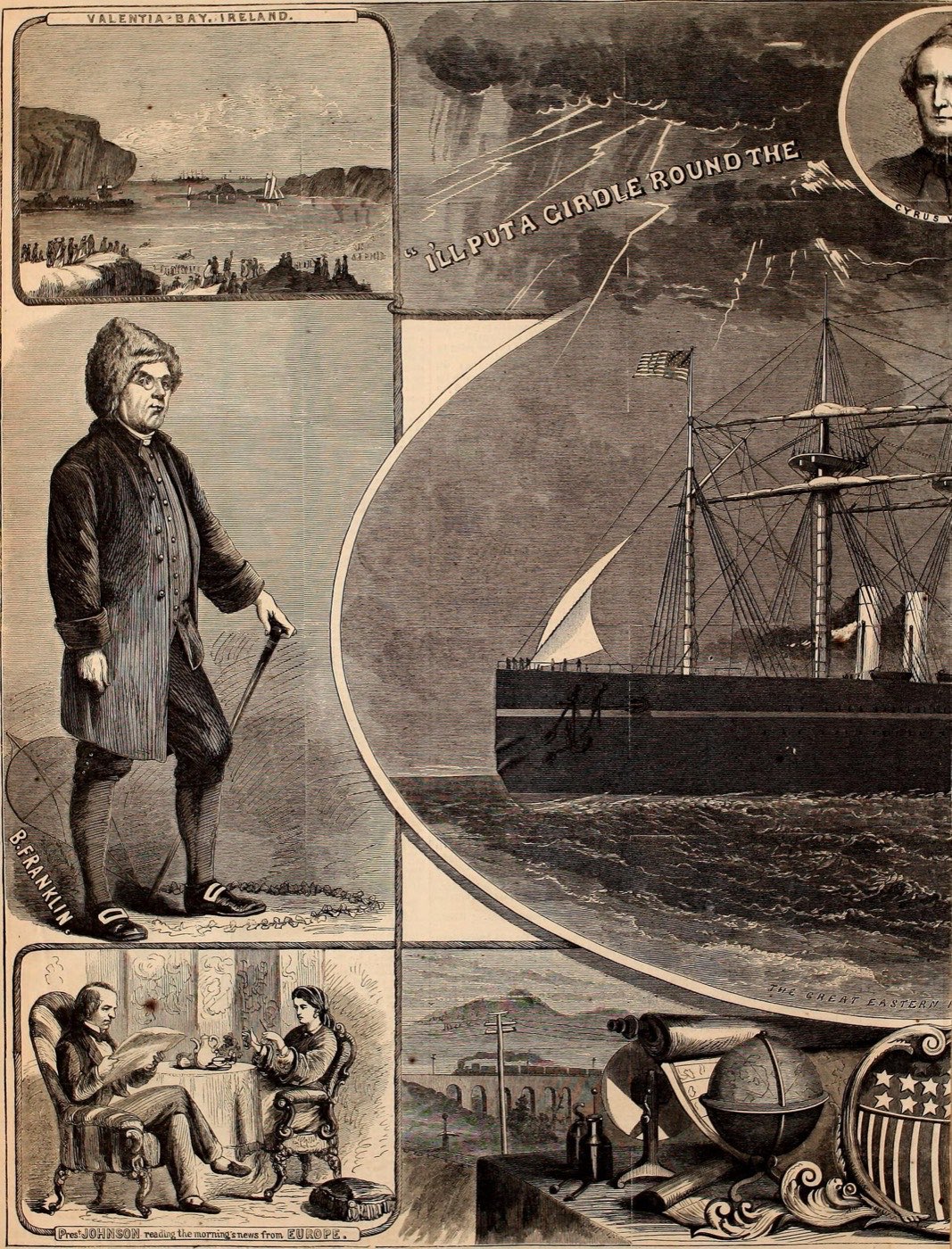
A century later the gold was bandwidth, and the “shovels” were made of fibers of glass.
In the late 1990s the rule was simple. Lay fiber now, everywhere, before a competitor owned the next century. So the carriers tore up the streets. Seattle alone issued more than eleven hundred street-cutting permits in the year 2000, and one block of Seneca Street downtown was opened and patched twenty-eight times after 1990, fourteen of them in a single two-year stretch, while Pam Thurston, whose hair salon sat on one of the torn-up corners, watched the barricades turn her regulars away. More than thirty companies were digging the same downtown; at least sixteen separate lines threaded beneath its streets, and a crew would now and then sever a rival’s glass that had gone into the ground the week before. Being wasteful was cheaper than being late. Out past the harbor, a cable ship paid out a thread of glass thinner than a human hair across the floor of the ocean, steering blind around seamounts and century-old shipwrecks on nothing but arithmetic.
When it was over, the accounting was strange. Of all the fiber laid in the boom, barely a few percent was ever lit. The rest sat in the ground, dark, a continent wired for a future that had not arrived. In 2002, WorldCom and Global Crossing collapsed inside a few months of each other, the largest bankruptcies the country had ever seen, and the men who had run them went to prison or into hiding.
Here is the part the shovel sellers leave out. That dark fiber did become the future. It is the cheap backbone that streaming video and the modern internet were built on, exactly as the framework predicts. But the people who paid for the glass were not the people who got rich on it. Global Crossing’s investors did not get Netflix’s stock. The crews who laid the cable did not get the golden age. Deployment does not pay back the people installation ruined. It just builds on their graves.
Deep Dive: The man who bought the house
The first strand had crossed the Atlantic in 1988, on an AT&T ship named, without a trace of irony, Long Lines. It cost $335 million and carried forty thousand calls at once, ten times the copper line it replaced, and it made the ocean look like a solved problem. The man who would build the largest of the private networks that followed had never spliced a fiber or stood on a cable deck. Gary Winnick had sold junk bonds for Michael Milken at Drexel Burnham. He knew financing, not glass.
He founded Global Crossing in 1997 to string cable under the world’s oceans, and for about two years the market believed him without reservation. The stock made his personal stake worth roughly $6 billion. In 2000 he paid $94 million for Casa Encantada, a sixty-room estate above the Bel-Air Country Club that had once belonged to Conrad Hilton — the most anyone in America had ever paid for a home.
In January 2002, Global Crossing filed the fourth-largest bankruptcy in the country’s history, $12.4 billion in debt. Thousands of its employees lost their jobs and their retirement savings in the same quarter Winnick was finishing a two-year renovation of the house. He had already sold $734 million of the stock. Bernie Ebbers, who ran WorldCom into a larger grave that summer, went to prison for it; Winnick was never charged with anything. He settled with the shareholders for $55 million, offered the workers $25 million of their 401(k)s back, and kept Casa Encantada.
Compute
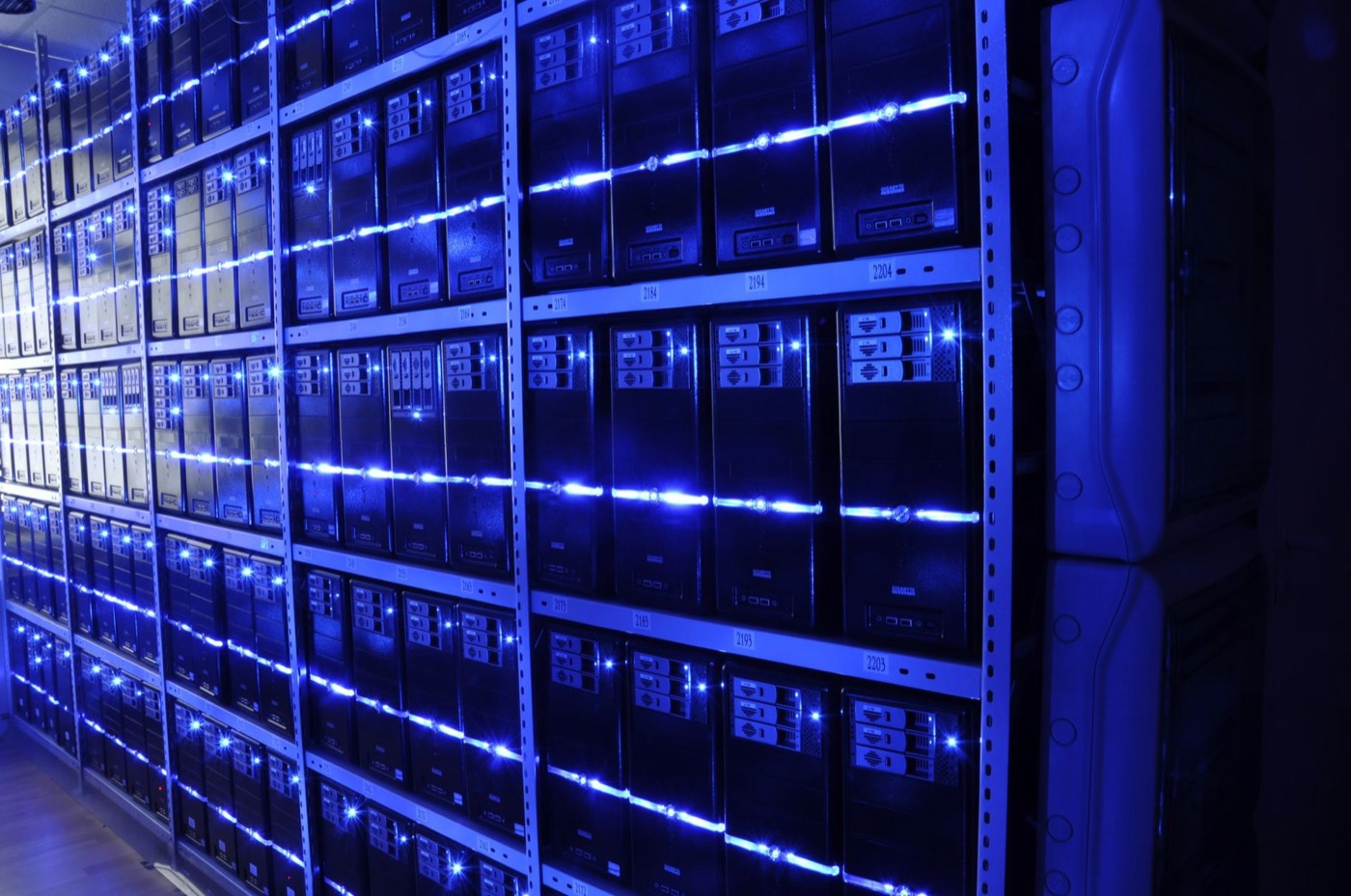
In Virginia and Georgia and Utah, a utility commission votes to keep a coal plant running that it had promised, in writing, to close.
That is where this rush begins, with its cost, and this time the cost is not a generation downstream. It is already here, in the air the people next to that plant are breathing. The gold now is the token, and the shovel is the data center. If you want to see one, drive to Ashburn, Virginia. There is no skyline, no cathedral to the most consequential machinery of the age. There are windowless gray boxes behind double fences, four gigawatts of computing power humming behind chain-link, looking for all the world like a place that stores office furniture.
The boxes run on electricity and water. Data centers were about four percent of American electricity in 2023 and may reach twice that by the end of the decade. A single large one can drink five million gallons of water a day, most of which evaporates and never comes back. The grid cannot grow fast enough to feed them, and a model improves over a weekend while a substation takes years. So we keep the coal. We are burning three-hundred-million-year-old swamps so that a machine can render a French bulldog in a spacesuit.
Not everyone takes the check. A developer offered Mervin Raudabaugh fifteen million dollars for his Pennsylvania farm, sixty thousand an acre, several times what the land would bring on the open market. Raudabaugh is eighty-six. He turned it down and sold the development rights to a preservation program for a fraction of the offer, so that nobody could ever pour a data center on his fields. The buildout is not short of money. It is short of him, and of turbines, and of the half-million electricians it would take to wire what the money wants to build.
Washington’s appetite for coal is part of why those plants stayed open; data-center demand did not do it alone. And the water is a small thing beside what farming drinks. But it comes from the same taps, in the same droughts, and a person with a signature chose to take it. The things with no price, a drinkable aquifer and the line between what a person wrote and what a machine guessed, have quietly become scenery.
The decision
Blindness is something that happens to you. A blindspot you keep returning to, rush after rush, century after century, is something else.
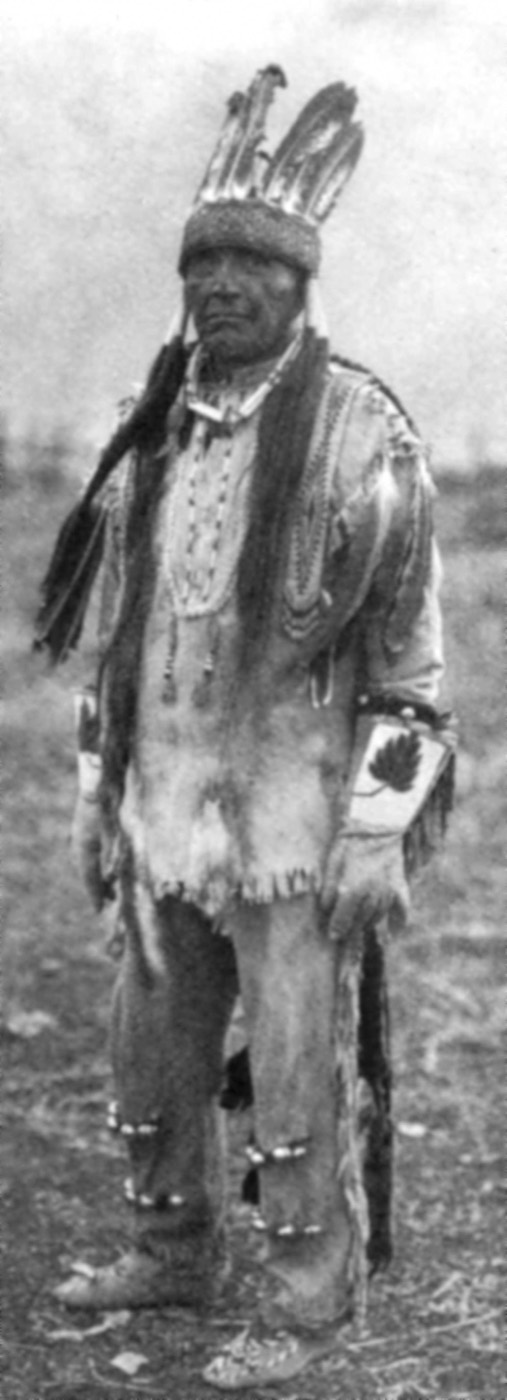
Remember the Klamath. The lake was never invisible. Someone had seen it, named it, walked to its edge for thousands of years and called it holy. “We couldn’t see it” was a lie the whole time. The blindness was selective, and a selective blindness has a beneficiary. Hillman had the excuse of being first and alone and afraid. We do not. We have the whole pattern written down. We have been warned in detail, with footnotes.
So the question is not whether we can see it. We plainly can. The question is why seeing has never once been enough to stop us.
Closing on what I can control
I am probably best described as standing on the rim of this wave trying to prepare for the what comes after the dust settles. Right now I am holding this new tech tool and trying to understand what problem to solve next. The thing I’m realizing is that “building software” for the tech community may not be the best place for me going forward.
I can choose to go hard and profit from the upheaval by selling shovels, or prepare to be flexible and leap in to the new world that’s coming. We may be taking this to the extreme as we Roam School our kids across the 63 US National Parks.
Sutter never knew, standing in his ruined wheat, which kind of man he was going to turn out to be: the one the rush tramples, or the one who quietly starts selling shovels.
I don’t know either and that’s totally OK.