Where's the political center, if money didn't move it right?
$7.25.
The federal minimum wage has been $7.25 an hour since July 24, 2009. The senators who kept it there call themselves moderate, and so does the press.
I followed the money across 85 polls, 33 named claims, and the funder profiles of ten think tanks. The political center is not where the establishment says it is. The cohort whose first preference is the establishment “moderate” position (voters who land right of center on every cluster issue in ANES 2024) is about 12% of the electorate, with a 95% confidence interval of 10 to 13 percent. That is comparable in size to the far-right cohort.
In Alabama, in Louisiana, in Mississippi, in South Carolina, there is no state minimum wage law at all; the federal floor is the floor. Twenty states still pay $7.25 . About 842,000 American workers earned at or below it in 2024 . Most of them work in restaurants. The federal tipped cash wage has been $2.13 an hour since 1991.
Cindy Smith has been pouring coffee at the Waffle House on Highway 138 in Conyers, Georgia, since 1995. Her cash wage is $2.92 an hour. Two presidents named Bush, two named Obama, two named Trump, one named Biden, and the federal cash wage for tipped workers has not moved since 1991. Smith told GPB that she goes to bed hungry, has lost 192 pounds because she cannot afford groceries, and chooses some weeks between food and the light bill.
The instrument problem
Moderate should be a coordinate, a position on a measurable spectrum located by what voters actually believe.
In American press coverage, moderate is a credential, a license to be heard, awarded by editorial pages and Sunday shows to people whose positions have been pre-approved, regardless of where the public sits.
I write from the left. The instrument doesn’t care.
The gap between the position and the credential runs on a few moves.
Wording exploitation. Gallup’s 2025 abortion question offers four options including “legal in only a few circumstances” and gets 49% saying abortion should be legal “in any or most” circumstances. Pew’s question removes the “few” middle bucket and gets 60% saying legal in all or most cases. The same population, read two ways, produces an eleven-point swing, and the “moderate” frame leans on whichever reading lets it land.
Shibboleth substitution. Pick one symbolic policy, let it stand for an entire category, then declare the category extreme. Defund the police is used to dismiss criminal-justice reform. Medicare for All is used to dismiss universal coverage. The $15 federal minimum wage is used to dismiss any minimum-wage increase at all.
The third move is harder to name, so I built an instrument to find it. It reads 85 national polls and 117 questions across eight issues, each tied to a primary source.
The chant
What follows is a list of receipts. Each entry is a public figure who has used the word moderate about themselves or their position, paired with the polling distribution at the moment they said it. The chant is heavy on Democrats by design, because the word moderate is most often deployed inside the Democratic coalition as an internal credential. Republican-side examples (15-week abortion bans called “consensus” by Trump, Graham, Pence; the BSCA called the “moderate gun compromise”; Romney-Cotton-Collins’s $10 + E-Verify minimum-wage offer) appear in the eight-issue table that follows.
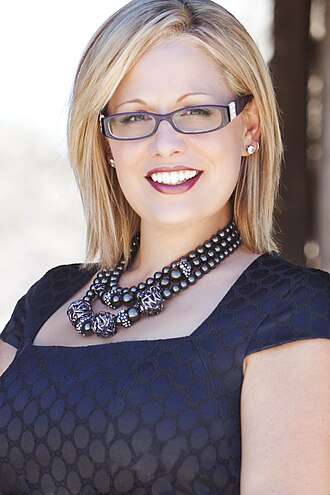
Kyrsten Sinema
D-AZ → Independent · March 5, 2021
- What they did
- Walked onto the Senate floor and gave a thumbs-down that killed the $15 federal minimum wage in COVID relief. She had built a brand on the word moderate. Mitch McConnell would later call her "a true moderate, and a dealmaker" at the McConnell Center in September 2022.
- What the public wanted
- 65% of Americans supported $15, including 41% of Republicans (PPC). Three years later, voters in Alaska, a state Trump carried by thirteen points, passed $15 plus indexing by ~58%. Missouri did the same.
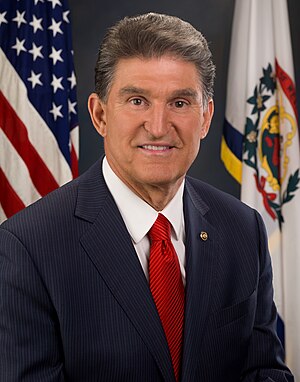
Joe Manchin
D-WV · February 22, 2021
- What they did
- Asked about a $15 federal minimum wage, said: "Eleven dollars is the right place to be." $11 had no organized constituency. It became the press's ceiling on what it would call moderate.
- What the public wanted
- 65% of Americans supported $15, including 41% of Republicans, that same year (PPC). When polled directly on the lowest acceptable floor, 74% said $12 or higher (PPC); YouGov found 77% saying the current floor was too low. Morning Consult/Politico the same week found 71% support for $11, but only as a binary alternative to $15.

Washington Post Editorial Board
Editorial · March 1, 2021
- What they did
- Headlined an editorial: "A $15 minimum wage won't happen. Democrats should get to work on a more modest raise." The newspaper of record had taken Manchin's $11 position and made it the editorial position.
- What the public wanted
- 65% of Americans supported $15. 74% said the lowest acceptable federal minimum wage was $12 or higher (PPC). The board printed the same number Manchin printed; the public was already past it.
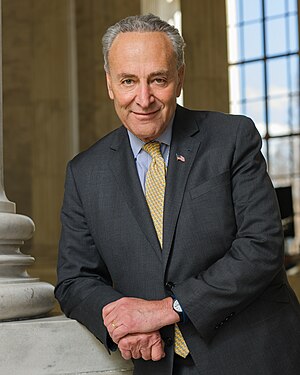
Chuck Schumer
Senate Majority Leader · July 30, 2025
- What they did
- Voted no on S.J.Res. 34, one of two resolutions of disapproval on $675M in arms transfers to Israel. The vote failed 24-73, a coalition majority of Republicans and most Democrats. Schumer was one of seventy-three. His statement called the Gaza humanitarian crisis "heartbreaking and unacceptable."
- What the public wanted
- 60% of Americans opposed sending more military aid; 75% of Democrats opposed it. 78% supported a ceasefire. 59% called Israel's response excessive. 50% told Quinnipiac it was genocide. Recognition of Palestine, a procedural floor, polled at 58%. Sympathy was the higher bar, and the public had crossed it. Nine months later, Pew (April 2026) put Israel unfavorability at 60% overall and 80% among Democrats; 59% had little or no confidence in Netanyahu. The vote did not age well.

Donald Trump
Former president · March 19, 2024
- What they did
- On WABC radio, asked about a 15-week federal abortion ban: "The number of weeks now, people are agreeing on 15. And I'm thinking in terms of that. And it'll come out to something that's very reasonable."
- What the public wanted
- Fox News polled the same week. A 15-week federal ban: 43% favor, 54% oppose. A nationwide law guaranteeing access to legal abortion: 65% support.
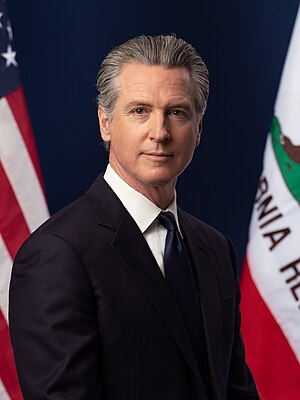
Gavin Newsom
CA Governor · May 12, 2025
- What they did
- Released a state model encampment-clearance order. Press-release headline: with urgency and dignity. Newsom's own quoted words inside the release: with urgency and with humanity. The headline got the press. The press echoed the headline.
- What the public wanted
- 70%+ of likely voters preferred Housing First over punitive approaches (NAEH, October 2024). KQED documented 471 sweeps in San Francisco that year and the routine of unhoused residents displaced from one block to the next, not into housing. Urgency showed up. Dignity did not.
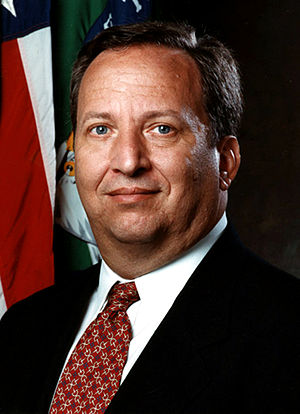
Larry Summers
Former Treasury Secretary · January 28, 2020
- What they did
- Published a Brookings/Hamilton Project paper titled Tax Reform for Progressivity: A Pragmatic Approach. The pragmatic approach: close loopholes, modest rate hikes, no wealth tax. Bloomberg Tax covered him as the responsible voice against the unworkable Warren plan.
- What the public wanted
- Wealth-tax support across many national polls: 63%, including 51% of Republicans. The Biden billionaire minimum income tax averages 67%, also including 51% of Republicans. Summers's "pragmatic" alternatives, when polled, come within five points of the proposals he calls fringe.
Manchin shows up three times in the chant: his own card, then the editorial board adopting his $11 number twice in theirs. He is not the exception; he is the model.
A note on Sinema’s card. The $15 wage in 2021 actually failed in two stages. On February 25, the Senate parliamentarian ruled the wage amendment ineligible for budget reconciliation under the Byrd rule, which moved it from a 50-vote bar to a 60-vote bar. On March 5, Sinema’s thumbs-down on the 60-vote waiver locked the floor closed. The rule made $15 unreachable; the gesture made the failure photogenic. Both moves were available to a senator who wanted to call herself moderate.
The “moderate” frame doesn’t even buy a polling discount.
Seven voices is anecdote, so the instrument needs a sample.
The eight issues
Across eight policy domains, the headline polled response on each issue sits left of where the establishment locates the moderate position.
| Issue | Median polled left-coded support | Establishment “moderate” position | Gap |
|---|---|---|---|
| Abortion | 60–63% legal in all/most (Pew 2026, AP-NORC, PRRI) | 15-week federal ban (Trump, Graham, Pence) | 38–43% favor that ban |
| Gun control | 79% favor raising age to 21 (Pew 2023); 64% support an assault-weapons ban (Pew 2023); 89% support universal background checks (Quinnipiac) | BSCA-style narrow compromise (excludes UBC and AWB) | 22–35 pts behind public on each item it omitted |
| Israel / Gaza | 78% support a ceasefire ; 60% oppose more military aid ; 59% call Israel’s response in Gaza excessive ; 50% say it is genocide; Israel unfavorability 60% overall and 80% among Democrats, up ~20 pts since 2022 (Pew, April 2026, YouGov, Quinnipiac, Reuters/Ipsos via Times of Israel, Pew Oct 2025) | Continued unconditional military aid | 25–48 pts behind public |
| Iran | 56–59% disapprove of US strikes on Iran (PBS/Marist, Pew 2026) | “All options on the table” / strikes | ~20 pts |
| Minimum wage | 65% $15 / 41% R ; 64% $17 (PPC, Data for Progress, advocacy poll labeled) | Manchin’s $11 / Romney-Cotton $10 + E-Verify | 25 pts |
| Healthcare | 65% Medicare for All neutral framing ; 85% drug-price negotiation ; 62% federal responsibility (DfP, KFF, Gallup) | Public option as “centrist alternative” | M4A and public option both clear majority; press treats one as moderate, one as fringe |
| Homelessness | 82% prioritize housing access ; 70%+ Housing First (BPC, NAEH) | Encampment clearance / “Housing First failed” | 12–22 pts |
| Wealth tax | 63% raise corporate tax rates; 58% raise rates on $400K+ households (Pew March 2025); 63% support a wealth tax (EWDI tax polling report, advocacy aggregation) | Loophole-closing only / “fiscally responsible” | 12–17 pts |
The “moderate” column did not write itself.
The laundering layer
In Maui, every August or September, about fifty people from Chevron, Altria, PG&E, Southern California Edison, the California prison guards’ union, and a rotating cast of energy and finance companies fly out to a beach resort with a few dozen California legislators. The flights are paid. The rooms are paid. The legislators sit through “issue briefs” between rounds of golf.
Moderate is a credential issued by a private club. The seven cards below are the receipts. This is not bribery. It is editorial pre-packaging.

Independent Voter Project
501(c)(3) · founded 2006
- What they did
- Runs an annual Maui retreat for ~50 California legislators, paid for by Chevron, Altria, PG&E, Southern California Edison, the CA prison guards' union, and ~50 other corporate sponsors. The trip continued through the COVID travel advisory in 2020.
- What the public wanted
- IVP brands itself as nonpartisan and pro-"open primaries." There is no public polling for "centrism as a corporate-funded legislator junket" because the question is not asked.

Third Way
Think tank · founded 2005
- What they did
- Branded itself the "centrist" Democratic think tank. In 2013, SVP Matt Bennett told The Nation that "the majority" of funding came from a trustee board including Goldman Sachs, JPMorgan, Warburg Pincus, PhRMA, SIFMA, and ExxonMobil. Cited to argue Medicare for All is a "glass jaw."
- What the public wanted
- 65% of Americans support Medicare for All under neutral framing (Data for Progress, Nov 2025). 62% say healthcare is the federal government's responsibility (Gallup, Dec 2024).

Committee for a Responsible Federal Budget
Think tank · founded 1981
- What they did
- Introduced by mainstream press as the "non-partisan, centrist" deficit-hawk voice. One major funder: the Peter G. Peterson Foundation, which has given upward of $12 million between 2012 and 2020. Michael Hiltzik at the LA Times called CRFB a "Peterson billionaire's front group." Pushes "loophole-closing only" as the responsible alternative to a wealth tax.
- What the public wanted
- 63% support a wealth tax, including 51% of Republicans. 67% support a billionaire minimum income tax, also including 51% of Republicans (EWDI tax polling report, advocacy aggregation).

Washington Institute for Near East Policy
Think tank · founded 1985
- What they did
- Founded by Barbi Weinberg, then a top AIPAC donor, with first executive director Martin Indyk, formerly AIPAC's deputy director of research. Mearsheimer & Walt describe WINEP as the Israel lobby's purpose-built think tank, created to give AIPAC's positions academic cover; WRMEA's 1991 reporting corroborates the AIPAC adjacency. Introduced on Sunday shows as non-partisan.
- What the public wanted
- 78% support a ceasefire in Gaza. 60% oppose more US military aid to Israel. 59% call Israel's response excessive. Pew Israeli-government favorability inverted to 35/59 by Oct 2025.

Manhattan Institute
Think tank · founded 1978
- What they did
- Funded by the Bradley Foundation and the Thomas W. Smith Foundation. Stephen Eide writes its homelessness papers, framed as "sensible centrist" responses to encampments: encampment clearance plus mandated treatment.
- What the public wanted
- 70%+ of likely voters prefer Housing First over punitive approaches (NAEH, Oct 2024). 82% say the federal government should prioritize housing access (BPC).

Cicero Institute
Think tank · founded 2016
- What they did
- Funded by Joe Lonsdale, Palantir co-founder. Produced the report titled "Housing First is a Failure," whose framing NPR carried into mainstream coverage in 2024, describing Cicero as trying to "upend" state homelessness policy before introducing critics, and which now anchors red-state encampment-criminalization legislation.
- What the public wanted
- 70%+ Housing First. The HUD literature, the Urban Institute, and the journal Housing Matters have all rebutted the "failure" framing; Housing First works when funded and implemented as designed.

James Carville
Democratic strategist · self-described moderate
- What they did
- Reduced an entire criminal-justice reform discourse to "the three stupidest words in the English language" (defund the police) to dismiss it. The shibboleth move in its purest form.
- What the public wanted
- Public opinion on criminal-justice reform is multidimensional and well to the left of "do nothing." Carville's move was to pick the most charged version of one position, declare it the entire category, and move on.
The pattern is the same shape every time. An industry-aligned funder pays a think tank, the think tank produces a “moderate” or “responsible” or “common-sense” framing, the press introduces the think tank as non-partisan, a Senate office cites the framing in committee, a Sunday show repeats it, and the editorial page concurs.
Take Third Way and Medicare for All. Wall Street money went in: $850,000 from Goldman Sachs Gives between 2010 and 2011, $625,000 from Warburg Pincus chairman John Vogelstein, $5 million from Bernard Schwartz’s foundation since 2006, on a $9.3 million annual budget; the Boston Globe documented the chain in 2014, and the trustee board itself was the donor list . Third Way’s standing line on Medicare for All has been that it is a “glass jaw” (superficially popular, vulnerable under hostile messaging), argued in Third Way reports and across years of Matt Bennett media appearances and op-eds. From there, in the public record, it is the things every veteran Senate staffer reports: the framing cited in committee testimony, repeated on Sunday shows, concurred with on the editorial page. Trace runs at least this far in the public archive; the rest is what the system does that does not always leave a URL.
This is not the full think-tank universe. Roosevelt, EPI, and CAP draw similar funding scales on the other side. The asymmetry in the cards is the asymmetry in the credential under audit; the word moderate is laundered, not the word progressive.
If the credential is for sale, the audit had better cut both ways.
The audit cuts both ways
The instrument did not return majority backs every left-coded position. Here are four places where the data goes the other way.
The tipped sub-minimum wage. Massachusetts Question 5 in November 2024 would have phased out Massachusetts’s state tipped subminimum wage and required employers to pay tipped workers the full state minimum. (The $2.13 federal tipped floor is set by federal law and a state ballot can’t reach it.) Voters rejected the measure 64-36. The progressive activist position on tipping was genuinely to the right of the median voter, and the National Restaurant Association’s “moderate, common-sense” framing held.
California Proposition 32. An $18 state minimum wage, rejected by 50.8-49.2 the same night. At a high enough threshold, even pro-wage voters say no.
The 2023 Iran prisoner swap. 28% approved. 55% disapproved (in a single Senate Opportunity Fund poll covered by the right-leaning Free Beacon). This is the one Iran-portfolio “moderate hawk” position in the dataset that matched the median voter.
The handgun ban. Gallup, October 2024: 20% support, 79% oppose. Left-coded and a real minority.
And once where the establishment was the left flank
Immigration enforcement, 2021 through 2024. The Democratic establishment’s posture for most of this period (Title 42 framed as a public-health relic, the border described as a managed flow, the Republican word crisis treated as bad faith) sat to the left of where the median voter actually was. By February 2024, Pew found 78% of Americans calling the border a crisis or major problem, including 67% of Democrats and 75% of independents. Gallup, June 2024: 55% wanted immigration decreased, the first majority for “decreased” since 2005, with independents at 50%.
The 2024 Lankford-Murphy-Sinema bipartisan border bill is the moment the establishment Democratic position formally caught up. The bill was framed as the moderate compromise: by Schumer’s office, by editorial pages, by Sunday shows. It contained tighter asylum standards, faster removals, and an emergency authority Republicans had asked for. Trump told his caucus to kill it, and they did. The instrument, in that case, was measuring distance to a public that had already moved right of the people who got to call themselves moderate. Same shape; opposite vector. of the forty-five distinct pollster strings cited above (forty-one organizations after merging aliases like “Marist” / “PBS/Marist” or “AP-NORC” / “AP-NORC/UChicago Harris”), twenty-nine are gold-standard or methodologically clean. Ten are advocacy polls cited with disclosure inline. Two (Mark Penn’s Harvard CAPS-Harris and its Stagwell parent) are cited as wording-trap examples. When CAPS-Harris asked Americans whether to support Israel’s effort “to take out Iran’s nuclear weapons program,” it got about 60% yes. The same week, PBS/Marist asked plainly about military action and got 56% opposed. Both the Harvard Crimson and Semafor have documented Penn’s loading. The Harvard brand is doing laundering work; the rest of the pollster column is not. The audit is auditable.
That leaves one question. If the establishment “moderate” is right of the public on most issues, where on the spectrum is it actually sitting?
The spectrum, modeled
Cluster Americans not by self-identification but by their actual answers across these eight issues, and five cohorts emerge. Each holds a coherent basket of positions. None is fictional; every cell below is built from the same partisan crosstabs cited above, mapped to the cohort that holds that position most strongly. The “establishment ‘moderate’” (the position the press locates at the center) appears in its own column, plotted where the data places it.
The labels Far-Left through Far-Right describe percentile bins on a continuous left-right ideology score. They are a presentation choice, not value judgments and not BIC- or silhouette-discovered clusters. The methodology section below has the full specification.
Read down the Establishment “moderate” column. It does not sit at the Center. On seven of eight issues it sits at Center-Right or further right.
Eight charts follow, one per issue, with the polling that grounds each. Five cohort positions run left-to-right; the ▲ marker shows where the establishment “moderate” actually sits.
Abortion
"Should abortion be legal?" And where the 15-week ban actually polls.
- Legal in all/most cases: 60% (Pew, March 2026) Pew 2026
- Legal in all/most cases: 64% (AP-NORC, July 2025) AP-NORC
- 15-week federal ban: 43% favor / 54% oppose Fox News, March 2024
- Nationwide federal right to abortion: 65% support Fox News, March 2024
Gun control
Five distinct items, ranked left-to-right by how much regulation each cohort accepts.
- Universal background checks: 89% support Quinnipiac, April 2021
- Mentally-ill purchase ban: 88% support Pew 2023
- Red-flag laws: 81% support Fox News, June 2022
- Raise minimum purchase age to 21: 79% support Pew 2023
- Federal assault-weapons ban: 64% favor (Pew); 52% favor (Gallup Oct 2024, eroding) Pew 2023 / Gallup 2024
- Handgun ban (left-coded outlier): 20% support / 79% oppose Gallup Oct 2024
Israel / Gaza
Where Americans actually sit on aid, ceasefire, and the question of sympathy.
- Israel unfavorable: 60% (up 7 pts YoY, ~+20 pts since 2022) Pew, April 2026
- Democrats unfavorable: 80% (up from 53% in 2022) Pew, April 2026
- Republicans 18-49 unfavorable: 57% (up from 50% YoY) Pew, April 2026
- Little or no confidence in Netanyahu: 59% (up 7 pts YoY) Pew, April 2026
- Support a ceasefire: 78% Economist/YouGov, Aug 2025
- Oppose more US military aid: 60% (75% Dems) Quinnipiac, Aug 2025
- Israeli response in Gaza is excessive: 59% Reuters/Ipsos, Aug 2025
- Israel is committing genocide: 50% Quinnipiac, Aug 2025
- Israeli government favorability: 35 favorable / 59 unfavorable Pew, Oct 2025
- Recognize Palestine (procedural floor): 58% Reuters/Ipsos, Aug 2025
Iran
From diplomacy to strikes: where does the public actually sit?
- Disapprove of US strikes on Iran: 59% Pew, March 2026
- Oppose US military action: 56% PBS/Marist, March 2026
- Oppose ground troops: 74% Quinnipiac, March 2026
- Should require congressional approval before military action: 70% Quinnipiac, Jan 2026
Minimum wage
From $25 federal floor to abolishing the federal floor entirely.
- Federal $15 minimum: 65% support / 41% R / 64% I PPC, Feb 2023
- Federal $17 minimum: 64% support / 45% R Data for Progress, April 2024
- Index minimum wage to inflation: 63% / 45% R PPC, 2023
- Current federal minimum is too low: 77% YouGov, 2023
- Alaska & Missouri ballot results: $15 + indexing passed by 57% in Trump-by-13 and Trump-by-18 states Ballotpedia, Nov 2024
Healthcare
From single-payer to repealing the ACA: where does the public actually sit?
- Government negotiates Medicare drug prices: 85% KFF, Sept 2024
- Federal government responsible for healthcare coverage: 62% (12-yr high) Gallup, Dec 2024
- Public option (added to private market): 68% support Morning Consult / Politico, July 2023
- Medicare for All (neutral framing): 65% Data for Progress, Nov 2025
- M4A even with "eliminate private insurance + raise taxes": 63% (drops only 2 pts) Data for Progress, Nov 2025
Homelessness
Housing First vs encampment criminalization.
- Federal government should prioritize housing access: 82% BPC, June 2023
- Housing First over punitive approaches: 70%+ NAEH, Oct 2024
- Lack of affordable housing is a major cause: 77% BPC, June 2023
- NYC right-to-shelter mandate: 79% support amNewYork/HarrisX, January 2024
- Zoning reform / housing-supply policies: 8 of 10 reforms clear majority across parties Pew/Ipsos, Sept 2023
Wealth tax
From a wealth tax + 70% top rate to cutting taxes further.
- Raising taxes on the wealthy: 79% support / 63% R / 63% of Trump 2020 voters Navigator, Feb 2024
- Higher taxes on billionaires (swing-state RVs): 69% favor / 58% R Bloomberg / Morning Consult, March 2024
- Billionaire minimum income tax (25% on >$100M households): 67% / 51% R (meta-analysis) Excessive Wealth Disorder Institute
- Wealth tax: 63% / 51% R EWDI tax polling report (advocacy aggregation)
- Raise corporate tax rate: 63% / 43% R Pew, Feb 2025
The far right is the smallest faction in the country. As a first-preference cohort it is comparable in size to the cohort whose first preference is the establishment “moderate” position. The latter, measured directly against ANES 2024 microdata as the share of respondents who land right of center on every cluster issue, is 11.7% of voters (95% CI 10.5–12.7%); the far-right partition cohort is 13% by construction under the matched-midpoint specification. On any given polled question, the establishment position can pick up additional yes votes from cohorts to its right when offered as a binary, which is why a 15-week ban polls at 38–43% even though the cohort that wants it as their preferred outcome is much smaller. The same percentile-bin partition of the four ANES-mapped issues (abortion, guns, healthcare, taxes) puts about two-thirds of Americans at or left of the establishment-moderate cohort: 67.7% under the matched-midpoint specification and 74.0% under k-means. The cohort contents (what each cell believes) are also constructed from the post’s framing rather than discovered, so the comparison runs through how the post defines each position rather than around it.
The center, defined by policy answers, is a real constituency but a small one. Most Americans hold a few high-conviction positions and a handful of crossings. The median voter visits the center; they don’t live there.
The bucket sizes above are now measured against ANES 2024 microdata on the four issues with clean ANES item maps (abortion, guns, healthcare, taxes); the four cohort cells without ANES item maps (Israel/Gaza, Iran, minimum wage, homelessness) are still derived from polled aggregates. The shape holds across both layers.
The shape has a cost.
The polled center, voting
Six recent races are the receipts.
On November 4, 2025, Zohran Mamdani won the New York City mayoralty with 50.8% against Andrew Cuomo, on the highest mayoral turnout since 1993. Anti-Mamdani super PACs, led by Fix the City at over $32 million, raised more than $40 million; pro-Mamdani PACs raised $371,000. The outside-spending ratio against him was roughly 17 to 1. He had been a public BDS supporter since 2014, had called Israel’s actions in Gaza a genocide since October 2023, and had pledged to arrest Benjamin Netanyahu under ICC authority if he entered the city. By the press’s coding, that platform is far-left. The vote was not.
In New Jersey’s 11th, Analilia Mejia won the April 16, 2026 special general against Republican Joe Hathaway, replacing Mikie Sherrill. She had taken the February 5 primary by 486 votes in a 12-candidate field, 28.75% to Tom Malinowski’s 27.96%. AIPAC’s super PAC, the United Democracy Project, had spent $2.3 million attacking Malinowski over his refusal to unconditionally back Israel aid. The ad blitz galvanized progressive voters and lifted Mejia. The money spent to defeat the candidate became money for the candidate. Mejia is co-executive director of the Center for Popular Democracy and was national political director for Bernie Sanders’s 2020 campaign. She raised more than $1 million in the primary, more than half from contributions under $200, against Hathaway’s $500,000 raised at roughly 70% from $1,000-plus donors. She was the only candidate at a primary forum to raise her hand on whether Israel is committing genocide in Gaza. J Street endorsed her. She campaigned on abolishing ICE, universal healthcare, and raising taxes on the wealthy. The press coded the platform far-left. Suburban New Jersey returned her twice.
In Maine, Governor Janet Mills suspended her Senate campaign on April 30, 2026, citing a fundraising shortfall; the Democratic Senatorial Campaign Committee endorsed Graham Platner by sundown. A February UNH poll had him at 64% to Mills’s 26%. He is an oyster farmer and former Marine who refuses AIPAC money and calls Gaza a genocide. He has weathered serious press over a since-covered Nazi tattoo he says he did not recognize, and over old Reddit comments discussing the success of the guerrilla tactics of the Palestinian resistance in Gaza in 2014; the institutional party endorsed him anyway.
In Michigan, an April 2026 Glengariff poll put Abdul El-Sayed at 23% to Rep. Haley Stevens’s 25%, inside a 4.4-point margin. El-Sayed was first in the field to call Gaza a genocide, wants to end the $3.8 billion annual military aid to Israel, refuses corporate PAC money, and outraised the sitting representative in Q1.
In California’s 11th, Nancy Pelosi’s seat, Saikat Chakrabarti is polling at 28% to Scott Wiener’s 33% and has self-funded nearly $5 million. He has said he will fight to end all military aid to Israel, and he draws no offense-defense distinction. Iron Dome funding is in the ban. After a candidate forum, Wiener moved publicly to call Gaza a genocide, a position he had previously declined.
Next door, in New Jersey’s 12th, the pro-Palestine super PAC American Priorities is committing $2 million to Adam Hamawy, a Princeton reconstructive surgeon who performed 120 surgeries at a Gaza hospital in May 2024 before being trapped at Rafah for a week. He runs in a 13-candidate primary backed by Justice Democrats, Our Revolution, and PAL PAC.
The Democratic Socialists of America, the umbrella for several of these campaigns, fell to about 64,000 members by October 2024 and rebounded above 80,000 a year later. Its August 2025 convention passed a resolution titled For a Fighting Anti-Zionist DSA, formalizing expulsion of endorsed officials who supply material support to Israel. Membership grew on net.
A mayoralty and a House seat have actually been won. Platner is the presumptive nominee. El-Sayed is in a statistical tie. Chakrabarti is closing on a five-point gap. Hamawy is one of thirteen. The polled center is showing up at the polls. It has not remade the building, and in New York the building spent seventeen dollars to its one to keep it out. Whatever carried the establishment “moderate” to where the press now locates it had a long time to set, and the next question is who set it.
Coda
The “moderate” did not drift to where it now sits. He was carried there, by name and on a schedule.
In August 1971, two months before Nixon put him on the Supreme Court, Lewis Powell wrote a confidential memorandum for the U.S. Chamber of Commerce, arguing that American business was under attack and had to organize, fund, and staff its way back into the universities, the press, the courts, and the legislatures. The memo did not start the project. Corporate organizing was already underway by the late 1960s; the historiography (see Mark Schmitt on the memo’s origin myth, Kim Phillips-Fein on the prior decades of donor mobilization) treats it as crystallization, not blueprint. What the memo did was name the assignment the donor class was already preparing to take, on the letterhead that lent it weight. The think tanks you have just read about are the institutional record. In 1985, a group of Democrats founded the Democratic Leadership Council and set out to make their own party safer for the donors Powell had organized; by 1992 their candidate was president, and the word moderate, inside the coalition, meant whatever did not frighten Wall Street. In 2010, in Citizens United, five justices ruled that corporations could spend without limit on independent political speech. Two months later, the D.C. Circuit’s SpeechNow extended that logic to individual donors and gave the country the Super PAC. In 2014, McCutcheon lifted the aggregate cap on what a single person could give to candidates and parties combined. By the time the chain settled, the money could speak as loudly as it wanted, for as long as it could pay. Three deliberate acts, none of them accidents, and none of them moderate.
And the left? The American left was not argued with; it was named. The Army-McCarthy hearings discredited McCarthy by 1954, but the apparatus he gave the country a face for had been built before him and outlived him by decades: the Smith Act prosecutions of Communist Party leaders, the Hollywood blacklist following the Waldorf Statement of 1947, the Taft-Hartley §9(h) loyalty oaths that triggered the CIO’s purge of its left-wing unions in 1949, and COINTELPRO, which ran through 1971. The apparatus taught two generations of journalists, professors, and senators which words ended a career, and the lesson outlived the man. The reflex is now automatic: a 65% policy is called socialist, a 60% policy is called radical, and the press repeats the framing as if it were weather.
It has been making the median voter, someone who wants a $15 wage and a doctor and a ceasefire, sound foreign to themselves.
Imagine, for a moment, trying to explain this to a Belgian. You sit them down at a kitchen table and walk them through it. A position held by two-thirds of the country is the far left. A position held by roughly an eighth is the responsible middle. The Belgian is patient. They have heard worse. But when you tell them that proposing a federal minimum wage worth less than the one the country had in 1968 (adjusted for inflation, mind) gets a senator called a socialist, while voting against it gets a senator called nothing in particular, the Belgian goes very quiet and asks if you are reading the dictionary upside down.
Universal healthcare, a wealth tax, a fifteen-dollar floor: ordinary furniture in every other rich country. Here the press calls them European-style, and means it the way one might say unwashed.
I have called people moderates. I have used the word in conversations I would not unsay if I could. I never checked whether their positions matched any polled center. I had no instrument. I had a mood.
The word has done real work for the people who use it about themselves. It has bought them an unbothered Sunday morning. A chair at the dinner. A press corps that introduces them, in the same paragraph, as both centrist and non-partisan, when they are neither.
It has done work for me, too. Calling someone a moderate let me skip a step. It let me sound reasonable without doing the reading.
So now that I can’t say moderate or centrist without cringing, what am I going to say? I’m going to say they’re endorsed by the Uniparty. It is the party ruled by the oligarchy, the corporations, and the foreign-aligned lobby that just spent $2.3 million in New Jersey to take out the wrong Democrat and ended up electing a more progressive one.
It makes the introduction honest.
A note on the data
The essay ends above. What follows is methodology: how the dataset was built, what is open, and where the modeling is fragile.
The Jupyter notebook hosted next to the dataset is the source-of-truth analysis behind this essay; the prose above is the readable summary of what the analysis surfaced. The dataset is 85 polls and 117 questions across eight issues, plus 33 named establishment claims, 47 pollster bias profiles, and 10 think-tank funder dossiers. An “Open in Colab” link sits below.
Pollsters are tagged for quality. Probability panels (Pew ATP, AP-NORC AmeriSpeak, KnowledgePanel) and traditional telephone houses (Gallup, Quinnipiac, Marist, Fox News, KFF) are the gold-standard tier and account for the majority of the dataset. Advocacy polls (Data for Progress, NAEH, J Street, EWDI, Navigator) are flagged inline. Two pollsters, Harvard CAPS-Harris and its Stagwell parent, are cited only as wording-trap examples. The conclusion holds when advocacy polls are excluded; it would be brittler if it didn’t.
The cohort sizes are now measured against ANES 2024 microdata, released publicly in August 2025, on the four issues with clean ANES item maps (abortion, guns, healthcare, taxes). Under a matched-midpoint specification, the bands are Far-Left 19.4%, Center-Left 24.7%, Center 23.6%, Center-Right 20.7%, Far-Right 11.6%, with about two-thirds of voters (67.7%) at Center or to the left of it. Under k-means, the same dataset puts left-of-CR at 74.0%. Before ANES, paper-and-pencil cohort specifications anchored to partisan crosstabs and 2024 popular-vote / Gallup-ideology priors spanned 50% to 70% across six reasonable partitions; the ANES measurement falls within and toward the upper end of that range, which is why this section reports the measurement rather than the modeled range. The labels FL through FR describe percentile bins on a continuous left-right ideology score; ANES does not preferentially fit a five-cluster solution by BIC or silhouette, so the buckets are a presentation choice rather than discovered population groups. Between ANES 2020 and 2024, weighted mean attitudes moved leftward on every cluster issue: abortion -0.22, guns -0.31, healthcare -0.20, taxes -0.09 (1-7 scale); only defense spending moved rightward (+0.10). On Israel specifically, Democrats in ANES 2024 are net opposed to military aid (39.6% oppose, 29.0% favor); Republicans are net in favor (53.0% favor, 21.7% oppose); independents are mostly neutral.
The full audit trail is open. The CSVs are hosted at cyrusradfar.com/data/political-center/ and the notebook is on Colab below. If a number here is wrong, the path from claim to source is short, visible, and reversible.